Behind the Scenes of the Award-Winning Composition ‘Echoes’
The creation of an award-winning composition often involves a complex interplay of inspiration, technique, and collaboration. In the case of ‘Echoes’, a piece that has garnered critical acclaim, the journey from a simple piano sketch to a fully realized orchestral work was both methodical and organic. This article explores the various stages of its production, offering insight into the decisions and processes that shaped the final recording.
While the outcome has been widely celebrated, the path to completion was not linear. It required revisions, experimentation, and a willingness to adapt. By examining the workflow behind ‘Echoes’, we can better understand the multifaceted nature of contemporary composition and the many factors that contribute to a work’s reception.
From the initial piano motifs to the lush orchestrations and the final mastering in London, each phase brought its own set of challenges and opportunities. This behind-the-scenes account aims to shed light on the creative and technical considerations that informed the project, without attributing its success to any single element.
Initial Piano Sketches and Conceptual Development
The genesis of ‘Echoes’ can be traced to a series of piano improvisations recorded in a home studio. These early sessions were not intended for public release but served as a means to capture fleeting musical ideas. The composer focused on simple harmonic progressions and melodic fragments, allowing the material to develop naturally over time. Several of these sketches were later revisited and refined, forming the thematic backbone of the composition.
During this phase, the emphasis was on exploration rather than perfection. The composer experimented with different tempos, keys, and textures, often recording multiple takes to compare variations. This iterative approach helped identify the most compelling motifs, which would eventually be expanded upon. It also provided a flexible foundation that could accommodate later orchestrations without losing its intimate character.
Notably, the piano sketches were not bound by strict notation; instead, they were documented through audio recordings and rough notes. This method allowed for a more intuitive workflow, where the feel of the performance took precedence over precise notation. As a result, the initial sketches retained a raw, expressive quality that later informed the orchestral arrangement.
Orchestral Arrangement and Instrumentation Choices
Transitioning from piano sketches to a full orchestral arrangement required careful consideration of instrumentation and texture. The composer worked closely with an arranger to translate the piano material into a score for strings, woodwinds, brass, and percussion. The goal was to expand the sonic palette while preserving the essence of the original sketches. Each instrument group was assigned specific roles, from carrying the melody to providing harmonic support and rhythmic drive.
The arrangement process involved multiple drafts and revisions. The team experimented with different combinations of instruments, sometimes stripping back the orchestration to highlight a particular line, and other times layering textures to create depth. Decisions were often guided by the emotional arc of the piece, ensuring that the music evolved dynamically from start to finish.
One of the key challenges was balancing the orchestral forces to avoid overwhelming the delicate piano motifs. The arranger employed techniques such as doubling melodies in different octaves and using muted strings to create transparency. These choices were made in service of the composition, rather than for mere effect.
“The orchestration should feel like a natural extension of the piano,” the arranger noted. “It’s about enhancing, not overshadowing.”
Throughout this stage, the team relied on digital mockups to approximate the orchestral sound before recording with live musicians. This allowed for fine-tuning of the arrangement and helped identify potential issues in the score. While mockups provided a useful reference, the final interpretation was always intended for live performance.
Recording Sessions and Collaborative Dynamics
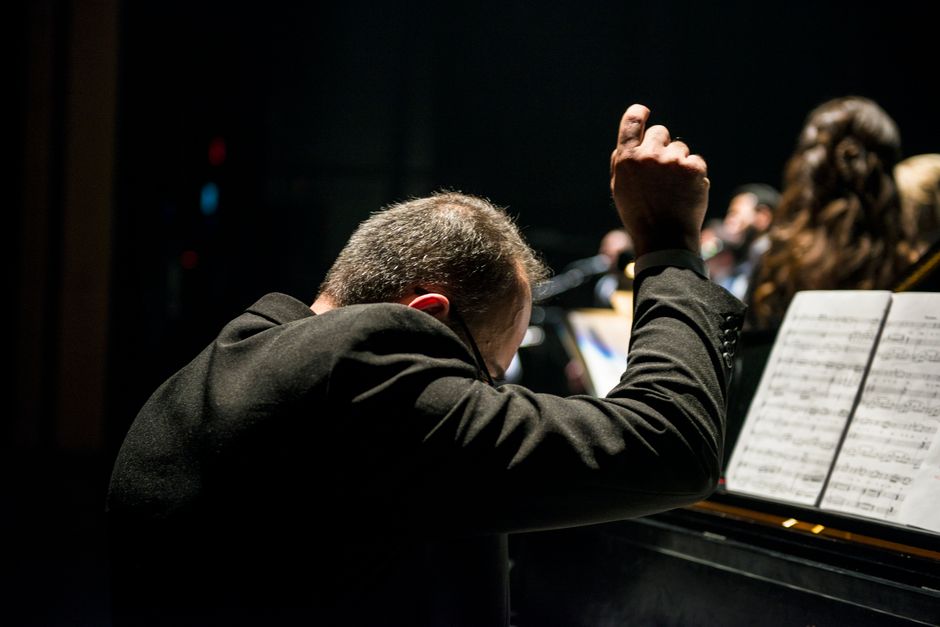
The recording of ‘Echoes’ took place in a professional studio with a full orchestra. The sessions spanned several days, with musicians carefully rehearsing and recording each section. The conductor played a crucial role in shaping the interpretation, guiding the ensemble through the nuances of the score. The composer was present throughout, offering feedback and making adjustments as needed.
Collaboration was central to the recording process. Sound engineers worked to capture the best possible takes, paying attention to microphone placement and room acoustics. The goal was to achieve a rich, detailed sound that would translate well across different listening environments. Multiple takes were often recorded to provide options during editing.
The atmosphere in the studio was focused yet flexible. Musicians were encouraged to bring their own expressiveness to the performance, within the framework of the written music. This balance between precision and spontaneity contributed to the overall character of the recording. The team also documented the sessions extensively, creating a valuable archive for future reference.
Despite the careful planning, unforeseen challenges arose, such as scheduling conflicts and technical issues. These were addressed through open communication and a willingness to adapt. The collaborative spirit helped maintain momentum and ensured that the project stayed on track.
Final Mastering in London and Technical Refinements
After the recording sessions, the raw tracks were mixed to create a balanced stereo image. The mixing engineer worked to blend the various orchestral elements, ensuring clarity and cohesion. Once the mix was approved, the project moved to London for mastering, a critical phase that polishes the final sound.
The mastering engineer in London applied subtle equalization, compression, and limiting to enhance the overall sonic quality. The aim was to achieve consistency across playback systems while preserving the dynamic range of the performance. This stage also involved sequencing and preparing the master for distribution, including format-specific adjustments.
Mastering is often described as both an art and a science, requiring a keen ear and technical expertise. The engineer made decisions based on the unique characteristics of ‘Echoes’, rather than applying a one-size-fits-all approach. The result was a master that met industry standards while retaining the artistic intent of the composition.
- Equalization to balance frequency spectrum
- Dynamic range control to manage peaks and troughs
- Preparation of master for various formats
The London mastering session also provided an opportunity for a fresh perspective. An independent engineer could identify issues that might have been overlooked during mixing. This external input proved valuable in refining the final product.
Reflections on the Creative Process and Industry Context
The creation of ‘Echoes’ illustrates the layered nature of music production, where multiple stages and collaborators contribute to the final outcome. While the piece has received awards and critical praise, its journey was marked by trial and error, as well as moments of uncertainty. The process was not a straight line but a series of iterations that gradually shaped the music.
It is important to note that awards and acclaim are not guaranteed outcomes of any creative endeavor. They depend on a wide range of factors, including timing, reception, and broader cultural context. The team behind ‘Echoes’ focused on the work itself, rather than anticipating external rewards.
For those interested in music production, the story of ‘Echoes’ offers a case study in methodology and collaboration. It highlights the value of patience, openness to feedback, and attention to detail. StageLight Media, which documented the process, emphasizes the importance of capturing these behind-the-scenes moments for educational purposes.
Ultimately, the composition stands as a testament to the possibilities of contemporary orchestral music. Its creation involved a blend of traditional techniques and modern technology, reflecting the evolving landscape of the industry. By examining such projects, we gain a deeper appreciation for the craftsmanship behind the music we hear.